Retail display lighting has two very different jobs. One is to communicate.
The other is to reveal the product.
LED light boxes are effective at the first: they illuminate brand graphics, promotional messages, menu content and campaign imagery.
Shelf lighting addresses the second: it puts light onto merchandise, shelves and display surfaces. Problems arise when buyers expect one system to perform both roles.
A successful retail display therefore begins by deciding what should be illuminated and why.
1. Light Box Sginage and
Shelf Lighting Solve Different Problems
An LED light box creates an illuminated visual surface. Its purpose may be to:
• attract attention;
• communicate a campaign;
• show product photography;
• display pricing or menu information;
• reinforce brand identity.
Shelf lighting works differently.
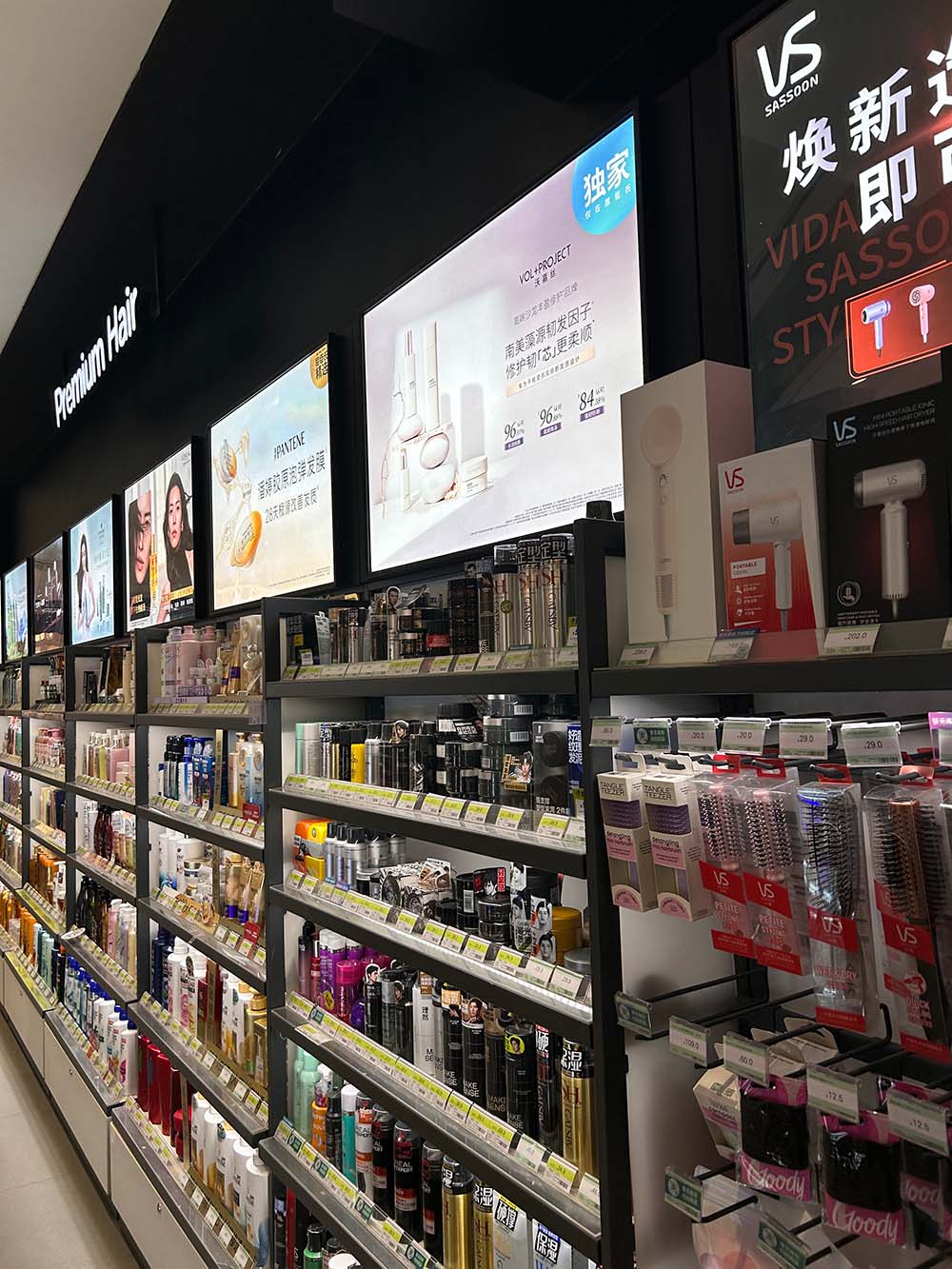
Its purpose is usually to illuminate physical merchandise or a display surface. Typical applications include:
• cosmetics shelves;
• supermarket displays;
• fashion accessories;
• beverage shelving;
• electronics;
• product showcases.
The distinction is important because a bright advertising graphic does not necessarily illuminate the product beside it effectively.
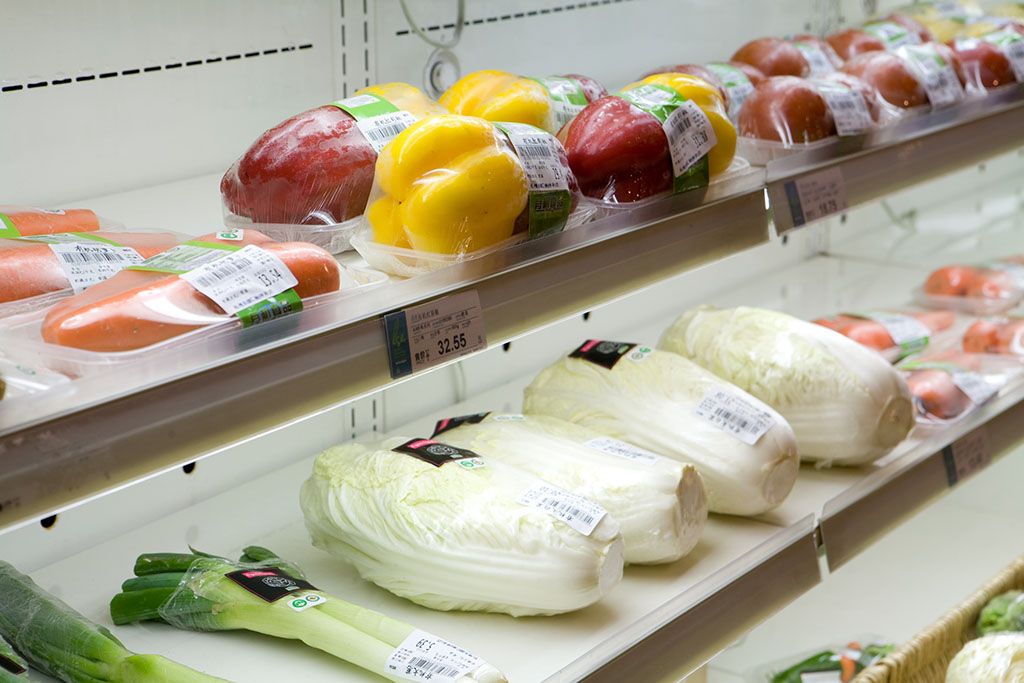
Likewise, excellent shelf lighting does not replace a clear promotional message.
2. Build the Visual Hierarchy Before Selecting Products
Retail lighting should guide attention.
A customer entering a store may first notice a large campaign image, then a product category, then individual merchandise.
Lighting can support this sequence. For example:
Campaign light box → product display → shelf lighting → product detail
If every illuminated element has the same visual emphasis, the store can become visually noisy.
Instead of specifying each fixture independently, designers and buyers should identify the intended hierarchy first.
Ask:
• What should customers notice from the entrance?
• What should attract them toward the fixture?
• Which products need closer inspection?
• Where should pricing or promotional information appear?
The answers determine where illuminated graphics and merchandise lighting belong.
3. Use LED Light Boxes for Communication
A light box is most useful when the graphic itself needs to attract attention. Typical retail applications include:
• seasonal campaigns;
• fashion photography;
• product launches;
• promotional posters;
• restaurant menus;
• brand walls;
• directional communication.
CITYLUX
ultra thin LED light boxes use a 10mm–14mm profile, depending on the selected configuration.
The slim structure can be useful where the display needs to integrate into finished walls, counters or retail fixtures without a deep cabinet.
For frequently changing campaigns, CITYLUX slide-in models allow the backlit film to be removed from the top and replaced in approximately 3 seconds.
This lets the hardware remain installed while the communication changes.
4. Use Shelf Lighting to Reveal Merchandise
Shelf lighting should make the physical product easier to see.
This sounds simple, but the required effect depends on the merchandise. Cosmetics may require good color presentation.
A beverage shelf may benefit from vertical illumination across packaging.
Fashion accessories may need controlled highlights that reveal texture and material. The lighting position should therefore be coordinated with:
• shelf depth;
• product height;
• product material;
• front edge;
• customer eye level;
• reflective surfaces.
Installing an LED strip without considering these factors can create bright shelf edges while leaving the merchandise itself poorly illuminated.
For B2B projects, the fixture and shelf should be designed together.
5. Avoid Making the Graphic Compete With the Product
One of the easiest mistakes in retail lighting is allowing the promotional display to dominate the merchandise.
If an illuminated graphic beside a shelf is significantly more visually intense than the product, customers may look at the advertisement but not at what the store is trying to sell.
The reverse problem also occurs.
Very bright shelf lighting can reduce the visual impact of an adjacent campaign light box. The solution is not a fixed brightness ratio that applies to every store.
It is coordination.
Evaluate the campaign graphic and merchandise from the customer's normal viewing position and adjust the lighting hierarchy accordingly.
6. Consider Color and Material Together
Retail environments contain materials that respond differently to light.
Glossy packaging creates reflections. Metallic products create highlights. Dark fabrics absorb more light.
White shelves can appear significantly brighter than black shelving under the same source.
The graphic inside a light box also changes perceived brightness according to its colors and print density. This means fixture specifications cannot be evaluated entirely separately from materials.
For important projects, buyers should provide representative graphics, shelf finishes and product information during sample evaluation.
A technically identical lighting system can create a very different visual result when the surrounding materials change.
7. Integrate Lighting Into the Fixture, Not After It
Shelf lighting is most effective when planned together with the display fixture.
Adding lighting after the shelving has already been manufactured can create problems with:
• cable routing;
• visible wiring;
• mounting space;
• shadows;
• power-supply location;
• maintenance access.
The same principle applies to embedded light boxes.
If the display is being integrated into cabinetry or a wall, the designer should define the product dimensions, access and wiring before the surrounding structure is finalized.
For shopfitters, coordination drawings are often more valuable than discussing products only through catalog numbers.
8. Think About Power and Connection as Part of the System
A retail lighting project may contain dozens of shelves and several illuminated signs.
At that point, power distribution and electrical connection become part of the project architecture. Buyers should define:
• system voltage;
• number of illuminated elements;
• cable routing;
• power-supply location;
• connection method;
• maintenance access;
• destination-market requirements.
A clean retail installation should not expose unnecessary wiring or make a single failed component difficult to access.
For modular fixtures or repeat store designs, standardized electrical interfaces can also simplify installation and future replacement.
9. Plan Maintenance Before the Store Opens
Retail displays are expected to remain visually consistent after opening. That means buyers should ask how each component will be serviced.
For the light box:
• How is the graphic changed?
• Can the power supply be accessed?
• Can the display remain mounted during routine graphic changes?
For shelf lighting:
• Can an individual lighting section be replaced?
• Are connectors accessible?
• Does maintenance require dismantling the fixture?
These questions become more important as the number of stores increases.
A five-minute maintenance inconvenience repeated across 300 stores is no longer a small design issue.
10. Standardize the System for Chain-Store Rollouts
Retail brands often benefit from standardizing a limited number of display modules. For example, a rollout may define:
• standard campaign light-box sizes;
• standard shelf widths;
• standard electrical interfaces;
• standard cable positions;
• standard frame finishes;
• standard graphic dimensions.
Individual stores can still adapt to different floor plans while using the same core display components.
This reduces unnecessary variation in procurement, installation, replacement parts and future store openings.
For CITYLUX projects involving ultra thin LED light boxes, certification requirements such as CE, RoHS, REACH and UKCA can be supported according to the product and target market.
For customized orders, production time depends on the project. As a general reference, quantities above 1,000 units typically require approximately 7 days, while quantities above 3,000 units typically
require approximately 15 days.
Final timing should be confirmed after the system specification is agreed.
11. What Should Buyers Include in an RFQ?
For a coordinated retail display lighting project, provide:
• store or fixture drawing;
• application;
• light-box dimensions;
• shelf dimensions;
• quantity;
• merchandise type;
• frame or fixture finish;
• installation method;
• electrical requirements;
• destination market;
• rollout schedule.
If available, include photographs, renders or technical drawings.
They help the supplier understand the relationship between the illuminated graphic, merchandise and surrounding fixture rather than quoting isolated components.
FAQ
What is the difference between an LED light box and shelf lighting?
An LED light box illuminates a graphic or promotional message. Shelf lighting primarily illuminates physical merchandise and display surfaces.
Should LED light boxes and shelf lighting use the same brightness?
Not necessarily. Their functions are different. The correct balance depends on the merchandise, graphic, ambient lighting and desired visual hierarchy.
Can an LED light box be integrated into retail furniture?
Yes, depending on the project structure. Dimensions, mounting, wiring and maintenance access should be coordinated before the furniture is manufactured.
How quickly can CITYLUX light box graphics be changed?
CITYLUX slide-in models allow the backlit film to be pulled out from the graphic slot and replaced in approximately 3 seconds.
What information should I send for a retail display lighting quotation?
Provide the store or fixture drawing, dimensions, quantities, merchandise type, installation method, electrical requirements, destination market and rollout schedule.
CTA
Planning a complete retail display rather than an sign light boxes?
isolated light box
Send CITYLUX your fixture drawing, light box dimensions, shelf layout, quantity and destination market. We can review the illuminated graphic, shelf lighting and electrical connection requirements as one
project.

 +86 0(20) 8488 0520


 online service
 +86 0(20) 8488 0520
 sales@cityluxled.com
 +8613640601669

